


Understanding common reasons for MOT failures
What the MOT actually checks
Every car in the UK has to pass an MOT once it reaches three years old, and then every year after that. The test takes around 45 minutes and covers a long list of safety and environmental checks: lights, steering, suspension, brakes, tyres, seat belts, mirrors, the exhaust and emissions, plus the general structure of the vehicle. It is not a service, and it will not tell you whether your clutch is on its way out or your cambelt is overdue. What it will do is confirm that the car meets the minimum legal standard on the day.
Because the standards are fixed and widely published, failures tend to cluster around the same handful of faults year after year. The good news is that most of them are cheap to fix if you catch them early, and several can be spotted in your own driveway with a torch and ten minutes to spare.
Broken bulbs and lighting faults
Lighting is consistently one of the biggest single causes of MOT failure, and it is also the easiest to put right. Testers check every lamp on the car: headlights, sidelights, indicators, brake lights, reversing lights, number plate lights, fog lights and rear reflectors. A single blown bulb is enough to fail the test.
Worth knowing:
- Brake lights need a helper or a wall to check, so press the pedal while someone watches, or reverse up to a reflective surface.
- Headlamp aim is checked on a beam setter. If you have recently changed a bulb or had a bump, the aim may be out even if the bulb works.
- Indicator flash rate matters. A fast, ticking blinker usually means a bulb has gone on that side.
- Cloudy, yellowed plastic headlamp lenses can fail on light output or beam pattern, and they polish up surprisingly well.
Replacing a bulb costs a few pounds and takes minutes on most cars, though some models hide them behind wheel arch liners and turn the job into a knuckle-scraping chore. Check them all a fortnight before the test and you remove a big chunk of risk.
Tyres: tread, condition and pressure
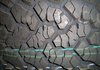
Tyres are another frequent failure point, and the rules are straightforward. The legal minimum is 1.6mm of tread across the central three-quarters of the tyre, around its entire circumference. Anything below that is an automatic fail and, more importantly, a serious safety risk in the wet.
Look beyond tread depth as well. Testers will fail a tyre with a cut or bulge, exposed cords, a repair that does not meet the standard, or a sidewall that is perished and cracking. Uneven wear across the width of the tyre often points to a suspension or alignment problem that will only get worse. Check pressures monthly when the tyres are cold, and remember that the spare, if you carry one, is inspected too.
Brakes and suspension
Brakes rarely fail without warning. Long pedal travel, a grinding noise, a car that pulls to one side under braking, or a handbrake that needs hauling up several clicks are all signs worth investigating before the test. Testers check the condition of discs, pads, pipes and hoses, plus the performance of the service brake and parking brake. Corroded or leaking brake pipes are a common and costly discovery, so a quick look underneath in dry weather can pay off.
Suspension faults often show up as knocking noises over bumps, vague steering or uneven tyre wear. Broken coil springs are a genuinely common failure on British roads, thanks to potholes and salt, and a snapped spring will fail the test outright.
Emissions and exhaust
Every petrol and diesel car is put through an emissions test, and diesels also face a smoke test. A car that is running rich, burning oil, or has a faulty sensor in the exhaust system can fail even if it drives perfectly well. Warning lights matter here too: an illuminated engine management light will fail the test on most modern cars, regardless of what the emissions readings say.
Simple groundwork helps. A well-serviced engine with clean oil, a fresh air filter and a decent run to warm it up before the test usually produces better readings than a cold engine that has only done short trips. If the light has been on for months, get the fault read and fixed rather than hoping it clears on the day.
Getting your car test-ready
A little preparation goes a long way. Before booking, work through the basics:
- Walk around the car and check every light, including the number plate lamps.
- Check tyre tread with a gauge and look for bulges, cuts or perishing.
- Top up screen wash, and check the wipers clear the screen properly with no splits in the blades.
- Make sure the horn works and the mirrors are secure and not cracked.
- Clear the cabin clutter, and check the seat belts pull out and retract smoothly.
- Ensure the boot and bonnet open and close, and that the number plates are clean and legible.
Book the test with a bit of breathing room before your current certificate expires. If something does need attention, you have time to shop around for a sensible price rather than accepting the first quote under pressure. A car that passes cleanly is also worth more when you come to sell it, so treat the MOT as useful maintenance rather than an annual nuisance.


Buying Guide
-
Use a tread depth gauge across several points on each tyre, ensuring the legal minimum remains above one point six millimetres.


Repairs



-

Long established fact that a reader will be distracted
-

Long established fact that a reader will be distracted
-

Long established fact that a reader will be distracted




Maintenance
Karla Gleichauf
12 May 2017 at 05:28 pm
On the other hand, we denounce with righteous indignation and dislike men who are so beguiled and demoralized by the charms of pleasure of the moment
M Shyamalan
12 May 2017 at 05:28 pm
On the other hand, we denounce with righteous indignation and dislike men who are so beguiled and demoralized by the charms of pleasure of the moment
Liz Montano
12 May 2017 at 05:28 pm
On the other hand, we denounce with righteous indignation and dislike men who are so beguiled and demoralized by the charms of pleasure of the moment